
Soil & Water Testing
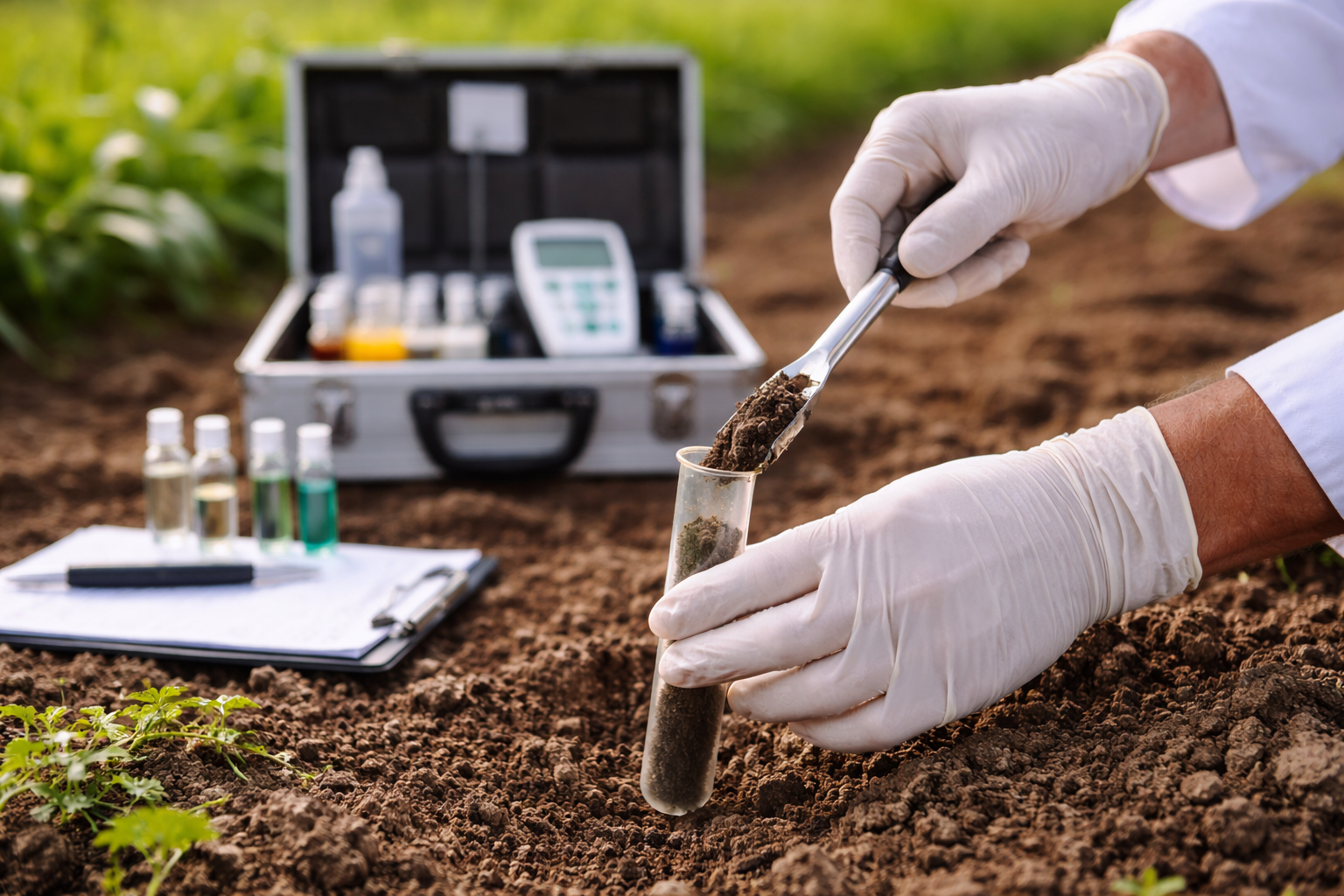
Healthy soil is not guessed at — it is measured, understood, and stewarded. WormTRAP testing moves beyond assumptions and visual cues and instead works from real, site-specific data.
Irrigation Water Audits
Water is the delivery system for biology and nutrients. If irrigation is uneven, too fast, too heavy, or poorly regulated, water is wasted, fertility leaches, and beneficial soil life is suppressed. A Water Audit ensures your system is delivering water exactly where it belongs — in the root zone, with minimal loss.
What an Irrigation Water Audit Does
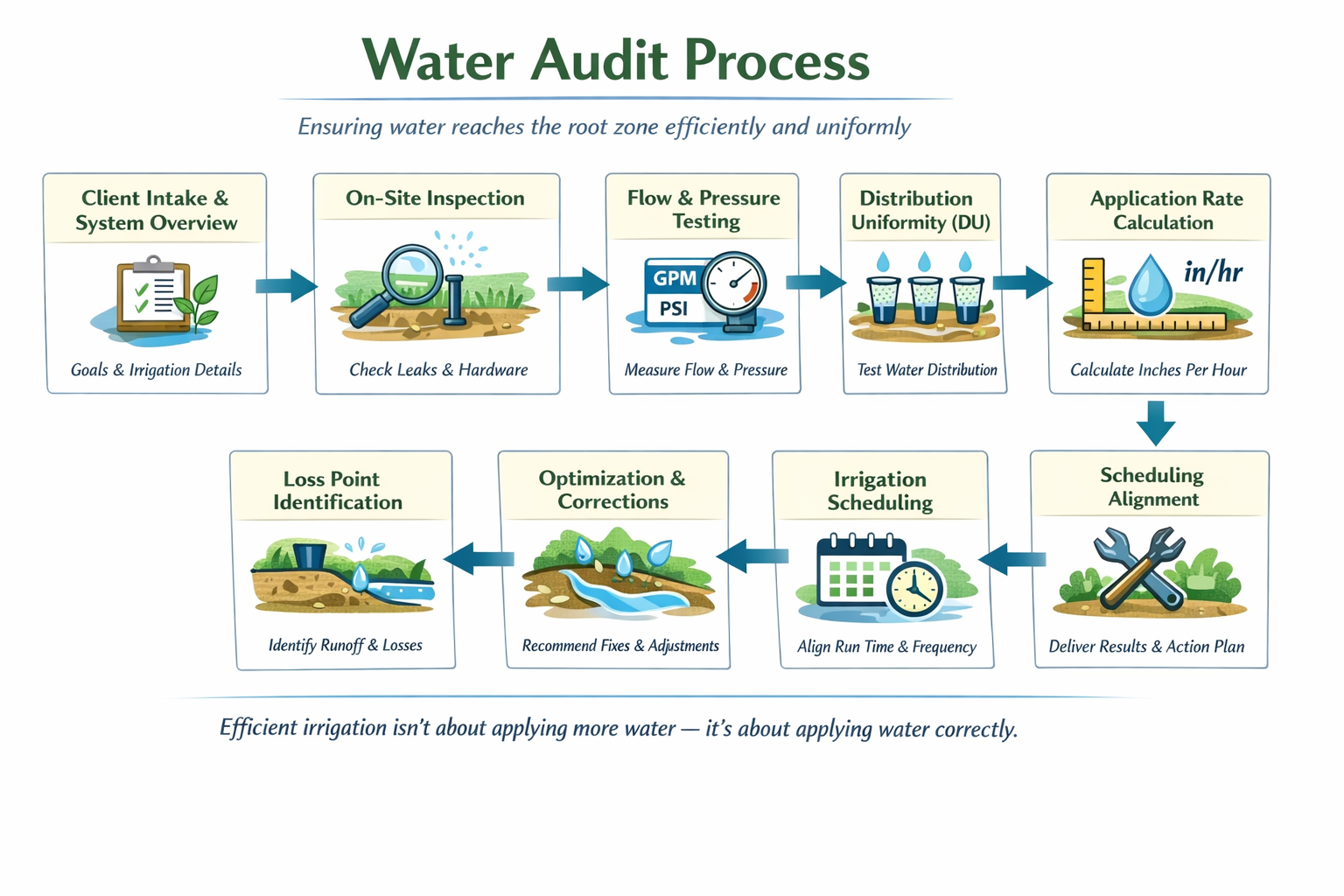
An irrigation water audit is a systematic evaluation of how water moves from the source through your irrigation system to the soil — ensuring every drop does useful work instead of becoming runoff, overspray, or deep percolation.
Why It Matters
- Reduce waste by identifying leaks, breaks, pressure loss, overspray, runoff, and deep percolation
- Improve uniformity so you don’t have to overwater dry spots just to keep plants alive
- Match irrigation to crop demand by aligning rate, runtime, frequency, and soil holding capacity
- Protect soil health by preventing leaching, aggregate collapse, and oxygen loss in the root zone
- Improve nutrient efficiency by reducing salt buildup and uneven delivery
- Lower operating costs by correcting excess pressure and inefficient scheduling
What We Measure
Depending on your system type (drip, micro, sprinkler), we typically measure:
- Flow rate (GPM)
- Operating pressure (PSI)
- Application rate (in/hr)
- Distribution Uniformity (DU)
- System efficiency and scheduling effectiveness
For drip systems, we also evaluate emitter consistency, clogging risk, and filtration performance.
Why This Is Essential Before Worm Tea or Fertigation
Biology can only thrive if water delivery is stable. A water audit ensures:
- Biology stays in the root zone
- Microbes aren’t drowned or starved of oxygen
- Inputs like worm tea and nutrients actually express their benefit
Deliverables
After the audit, you receive a clear, actionable plan that includes:
- Measured performance (flow, pressure, DU, application rate)
- A prioritized list of corrections (repairs, regulation, scheduling)
- Recommendations to align irrigation with soil function and biological inputs
Want to pair this with watershed assessment? We also offer an integrated Irrigation + Watershed Audit to show where water is coming from, where it’s going, and how to keep it on the land.
Soil Testing: The Foundation of Soil Healing
Why We Test the Soil
Soil testing allows us to establish a biological and nutritional baseline that reveals what’s really limiting plant uptake and microbial function — and where biology can do the work instead of chemical correction.
- Nutrient deficiencies and imbalances
- Soil fertility constraints limiting plant uptake
- Excesses that inhibit microbial function
- Opportunities for biological remediation instead of chemical correction
At WormTRAP, soil testing is the first step in healing the land. It ensures every biological input — especially worm tea — is purpose-built to meet the soil’s actual needs.
Soil Core Testing Method
We use a standardized soil core sampling method to ensure consistency and accuracy across sites.
- Soil cores are taken from the active root zone
- Multiple cores are collected across a defined area
- Samples are combined into a representative soil sample
- Soil is air-dried and prepared for analysis
This approach minimizes variability and ensures results reflect the true condition of the soil — not a single localized anomaly.
Nutrients & Factors Tested
Using the LaMotte SCL-15 SMART 3 Electronic Soil Lab, we analyze 15 critical factors that influence plant health, microbial activity, and nutrient cycling.
- Soil pH
- Nitrogen (N)
- Phosphorus (P)
- Potassium (K)
- Calcium (Ca)
- Magnesium (Mg)
- Sulfur (S)
- Iron (Fe)
- Manganese (Mn)
- Zinc (Zn)
- Copper (Cu)
- Boron (B)
- Sodium (Na)
- Electrical Conductivity (EC / soluble salts)
- Organic matter proxy indicators
Soil pH Testing
Soil pH is one of the most influential factors governing nutrient availability and microbial activity. Even when nutrients are present, imbalanced pH can lock them out of plant uptake or suppress beneficial biology.
- Confirm nutrient availability ranges
- Identify acidic or alkaline stressors
- Guide biological buffering strategies
- Avoid unnecessary amendments
Rather than correcting pH aggressively with chemical inputs, WormTRAP uses pH data to support biological stabilization over time.
Soil Microbial Biomass Testing (MicroBIOMETER)
We also evaluate living microbial activity using the MicroBIOMETER, a field-validated tool that measures active microbial biomass in soil.
- The overall vitality of soil life
- Whether nutrients are biologically accessible
- The soil’s capacity to cycle carbon and minerals
- Biological response to management practices
Why Microbial Testing Matters
Plants don’t feed directly on raw nutrients — they depend on microbial intermediaries to unlock, transport, and regulate nutrient flow. Measuring microbial biomass helps us:
- Establish a biological baseline
- Track improvements after worm tea applications
- Identify soils that need biological inoculation
- Verify that regeneration is actually occurring
Integrating Results for Soil Healing
When combined with nutrient analysis and soil core testing, pH and microbial biomass data allow us to design targeted, biology-first interventions — transforming testing into a living feedback system for regeneration.
- Identify nutrient deficits and biological constraints
- Set precise worm tea improvement targets
- Monitor soil response over time
- Reduce dependency on external fertilizers
Rapid, On-Site Results (24 Hours)
Unlike traditional lab testing that can take weeks, our process supports rapid soil testing within one day — enabling faster feedback, faster correction, and faster recovery.
Water Testing: Water Quality for Living Biology
Why We Test the Water
Water is not just a carrier — it’s the living medium that supports microbial life. If water is chemically harsh or biologically limiting, it can suppress beneficial microbes and blunt soil-healing results.
- Confirm water compatibility with aerobic biology
- Catch constraints that sabotage brews (low oxygen, extreme pH, high salts)
- Establish a baseline that can be improved through filtration and conditioning
How We Test the Water (On-Site)
We use the Apera SX736 Portable Water Quality Meter to measure critical parameters on-site — before and after filtration — to confirm water is truly “brew-ready.”
- Collect a representative sample from the source (tap or well)
- Measure baseline parameters with the SX736
- Filter/condition water intended for brewing
- Re-test to confirm improvements and brewing suitability
- Adjust brewing strategy as needed
What We Test (SX736 Parameters) & Why It Matters
These are the parameters that most directly control biological success in worm tea and irrigation water:
- pH — governs microbial activity and nutrient chemistry
- Dissolved Oxygen (DO) — the #1 brewing metric for aerobic biology
- Conductivity (EC) / TDS — indicates dissolved mineral/salt load
- Salinity — highlights salt-stress potential for biology and plants
- Resistivity — confirms ionic strength and filtration improvement
- Temperature — affects oxygen availability and microbial metabolism
Rapid Turnaround (Same Day / 1-Day Readiness)
Because testing is done on-site, results are available immediately. This supports a true Test → Filter/Condition → Confirm → Brew workflow within the same day.
Brew-Ready Water: Target Ranges
Before brewing worm tea, we confirm filtered water falls within biologically supportive ranges:
- pH: 6.5 – 7.5
- Dissolved Oxygen (DO): ≥ 8 mg/L
- EC / TDS: Low to Moderate
- Salinity: Minimal
- Temperature: 65 – 77°F (18 – 25°C)
Additional Safety Screens
When needed, we also screen for common biological inhibitors and water-source risks:
- Chlorine — verifies disinfection residual isn’t killing biology
- Chloramine — detects a persistent disinfectant that can sabotage brews
- E. coli (presence/absence) — practical safety screen for wells and risk sources (often ~24-hour incubation)
How We Use Water Results to Improve Worm Tea
Water results aren’t just recorded — they directly guide how biology is prepared and brewed. We use the data to confirm filtration improvements, optimize aeration to keep DO strong, adjust brewing approach for temperature and salts, and maintain consistent standards across sites.
Integrated Testing = Regenerative Confidence
Soil testing tells us what the land needs. Water testing ensures biology has the right medium to deliver it. That’s how we move from good intentions to repeatable results — healing soil with measured, living systems.