Need Fruit Trees?
Fruit, nuts & berries that give back for decades.
Fruit, nuts & berries, grown in living soil.
Whether it's a single lemon tree by the back door, a row of berries along the fence, or a backyard orchard, fruit plantings give back for decades. We help you choose what thrives in Southern California, plant it right, and build the healthy soil that keeps it productive.

Pick the planting that fits your space
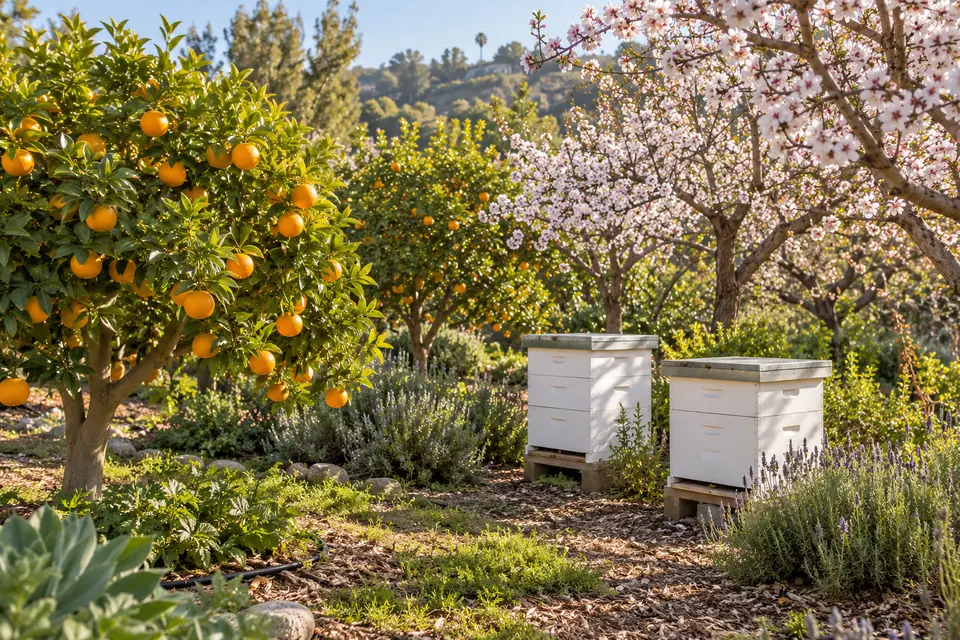
Fruit Orchard
A dedicated planting of fruit and/or nut trees such as citrus, apple, peach, olive, or almond. Provides long-term harvests, shade, and wildlife habitat. Beehives nearby help pollinate almonds and other fruit trees.
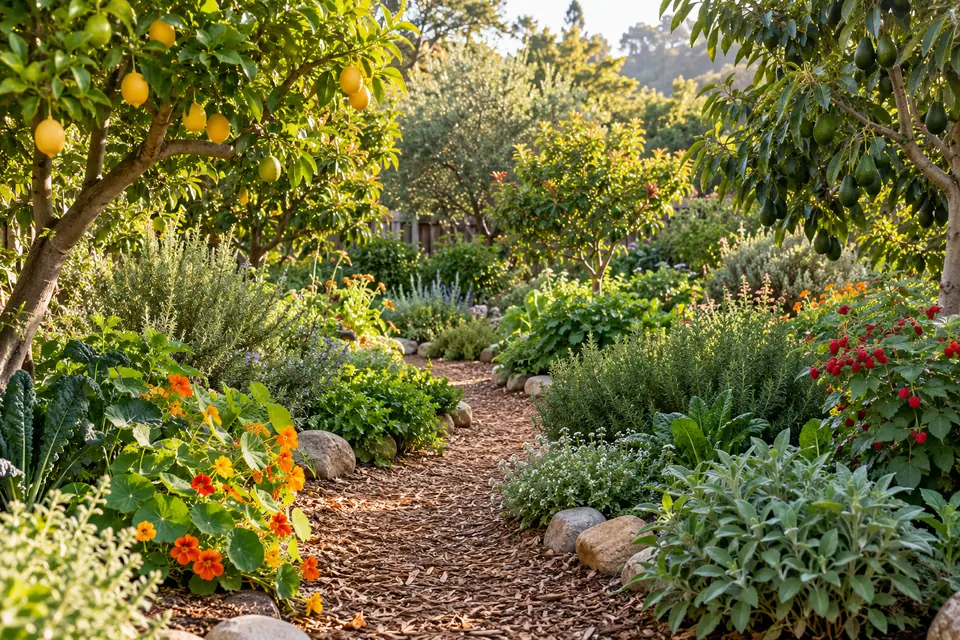
Food Forest
A diverse, multi-layered planting system that mimics a natural forest. Includes fruit and nut trees, shrubs, herbs, groundcovers, and vines. Designed for long-term, low-maintenance food production and habitat.
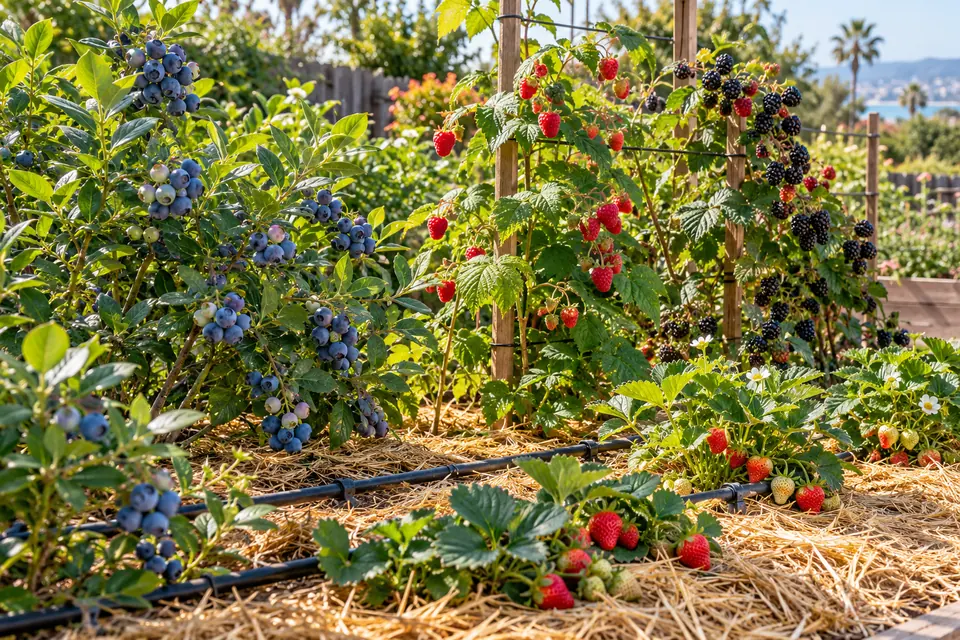
Berry Patch
Smaller-scale planting of berry-producing shrubs like blueberries, raspberries, blackberries, or strawberries. Great for fresh eating, preserves, and attracting pollinators.
What grows well here
Our mild winters favor citrus, subtropicals, and low-chill varieties. Here's a short list of reliable choices to start the conversation.
Tap a green name to see its varieties, a tree at about 5 years old, its size, and a planting guide.
🍋 Citrus
- Meyer, Eureka
- Bearss
- Washington navel, Valencia
- Gold Nugget, Satsuma
🥑 Subtropicals
- Hass, Reed, Fuerte
- Black Mission, Brown Turkey
- (feijoa)
- Passion fruit (vine)
🍑 Low-Chill Stone & Pome Fruit
- Anna, Dorsett Golden
- Babcock, Tropic Snow
- Santa Rosa, Satsuma
- Wonderful
- Fuyu
🌰 Nuts & Olives
- All-in-One, Garden Prince
- (coastal)
- (hot inland areas)
- Mission, Arbequina
🫐 Berries
- Blueberries: low-chill southern highbush (Sunshine Blue, Misty)
- Blackberries: thornless types
- Raspberries: Bababerry
- Strawberries
🍇 Vines
- Grapes: table and wine varieties (vines, not trees, and very popular)
- Passion fruit
- Kiwi: low-chill varieties in cooler spots
Microclimates vary a lot between the coast and inland valleys. We'll help you match varieties to your site.
Healthy trees start below ground
Most fruit tree problems trace back to the root zone: compaction, poor drainage, tired soil, or the wrong watering. We plant into living soil, build biology with worm castings and worm tea, and set up irrigation that matches each tree.
Variety selection, siting, and planting into prepared, biologically active soil.
Deep, infrequent drip irrigation sized for each tree as it grows.
Compost, worm castings, mulch, and worm tea to keep roots thriving.
Early detection of pests and deficiencies before they become problems.